SDHB (HMV320)
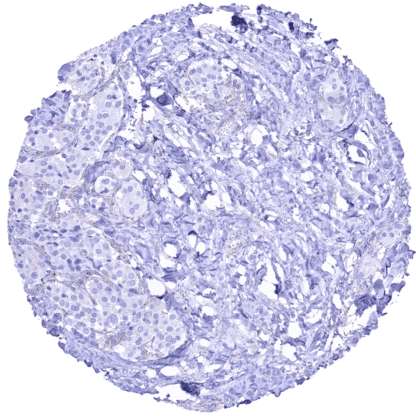
Recombinant Rabbit monoclonal / IgG 1:100 – 1:200 Research Use Only Intracellular Human HMV320 succinate dehydrogenase complex iron sulfur subunit B,CWS2,IP,PGL4,SDH,SDH1,SDH2,SDHIP Appendix: A strong SDHB staining should be seen in epithelial cells and a weak to moderate staining should occur in lymphocytic cells. SDHB staining should be absent in all cells of a tumor with known SDH deficiency. SDHB is a surrogate marker for an intact SDH complex. Succinate dehydrogenase complex iron sulfur subunit B (SDHB) is a 31.6 kDa protein coded by the SDHB gene at chromosome 1p36.1-p35. SDHB forms the succinate dehydrogenase protein complex II together with SDHA, SDHC and SDHD. Within this complex, SDHB is linked to SDHA at the catalytic end of the SDH protein complex which protrudes into the mitochondrial matrix while SDHC and SDHD are hydrophobic and attach the SDH complex to the inner mitochondrial membrane. SDH plays a pivotal role in both the citric acid cycle and the respiratory chain. It catalyzes the conversion of succinate to fumarate in the citric acid cycle downstream of IDH2. A loss of enzyme activity results in accumulation of metabolic intermediates similarly as under hypoxic conditions. Such a “pseudohypoxia” results in HIF-1 pathway activation and may induce a metabolic shift toward aerobic glycolysis . SDHB germline mutations can cause pheochromocytoma, paraganglioma, gastrointestinal stromal tumor (GIST), and renal cell ... Images describing the SDHB staining pattern in normal tissues obtained by the antibody HMV320 are shown in our “ Normal Tissue Gallery ”. Brain Cerebrum Rather weak granular cytoplasmic SDHB staining of cells. Cerebellum Rather weak granular cytoplasmic SDHB staining of cells. Endocrine Tissues Thyroid Weak granular cytoplasmic SDHB staining of epithelial cells. Parathyroid Moderate to strong granular cytoplasmic SDHB staining of epithelial cells. Marked heterogeneity between cells and cell groups. Adrenal gland Strong granular cytoplasmic SDHB staining of epithelial cells. Pituitary gland Moderate to strong granular cytoplasmic SDHB staining of epithelial cells. Only weak staining of pituicytes. Respiratory system Respiratory epithelium Marked granular cytoplasmic SDHB staining of epithelial cells, predominately in the sub-apical compartment. Lung SDHB staining is largely absent. Gastrointestinal Tract Salivary glands Granular cytoplasmic SDHB staining is strong in excretory ducts and... A variable level of SDHB expression occurs in virtually all tumors except those with an SDH deficiency. According to RNA data of the TCGA database, the level of SDHB expression is highly prognostic in renal cell carcinomas. The TCGA findings on SDHB RNA expression in different tumor categories have been summarized in the Human Protein Atlas. Absence of granular SDHB staining in tumor
cells of an SDH deficient renal cell
carcinoma. Warthin tumor with intensive SDHB
immunostaining of epithelial tumor cells. Paraganglioma with complete loss of
granular SDHB staining of tumor cells
while intense staining is retained in
stromal cells. Cancer tissue gallery No data available at the moment IHC users have different preferences on how the stains should look like. Some prefer high staining intensity of the target stain and even accept some background. Others favor absolute specificity and lighter target stains. Factors that invariably lead to more intense staining include higher concentration of the antibody and visualization tools, longer incubation time, higher temperature during incubation, higher temperature and longer duration of the heat induced epitope retrieval (slide pretreatment). The impact of the pH during slide pretreatment has variable effects and depends on the antibody and the target protein. All images and data shown here and in our image galleries are obtained by the manual protocol described below. Other protocols resulting in equivalent staining are described as well. Manual protocol Freshly cut sections should be used (less than 10 days between cutting and staining). Heat-induced antigen retrieval for 5 minutes in an autoclave at 121°C in pH 7,8 Target ... The prognostic relevance of SDHB expression in tumors and in preneoplastic disease needs to be investigated. The predictive relevance of SDHB expression in tumors is unknown. SDH inhibitors exist and are under investigation for treatment of pulmonary fibrosis and myocardial ischemia. Their potential role in cancers with high SDHB expression is unknown. There are two ways how the specificity of antibodies can be documented for immunohistochemistry on formalin fixed tissues. These are: 1. Comparison with a second independent method for target expression measurement across a large number of different tissue types (orthogonal strategy), and 2. Comparison with one or several independent antibodies for the same target and showing that all positive staining results are also seen with other antibodies for the same target (independent antibody strategy). Orthogonal validation: For the antibody HMV320 specificity is supported by the good concordance of the immunostaining data with data from three independent RNA screening studies, including the Human Protein Atlas (HPA) RNA-seq tissue dataset, the FANTOM5 project, and the Genotype-Tissue Expression (GTEx) project, which are all summarized in the Human Protein Atlas (Tissue expression SDHB) . SDHB positivity by HMV320 is particularly strong in heart and skeletal muscle, liver, kidney, and gastr...