Caspase-3 (HMV307)
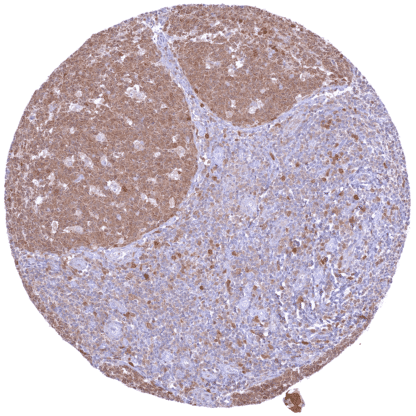
Recombinant Rabbit monoclonal / IgG 1:100 – 1:200 Research Use Only Intracellular Human HMV307 caspase 3,CPP32,CPP32B,SCA-1 Stomach: At least a moderate caspase-3 positivity should be seen in surface epithelial cells. Stomach:Deep gastric glandsand muscular cells must be caspase-3 negative. Caspase-3 is a multifunctional protein with a role in apoptosis regulation. Caspase-3 is (in its inactive form) a 32 kD protein which is coded by the CASP3 gene at 4q33-q35.1. Caspase-3 is one of 18 members of the Cysteine-ASPartic proteASES (cysteine proteases) family which share the capacity to mediate the cleavage of specific target proteins. All caspases are all initially produced as inactive procaspases. They can be activated by a wide range of specific internal and/or external signals. Caspase 3 belongs to the subgroup of effector/executioner caspases of the apoptotic subfamily of caspases. Caspase 3 cleave proteins that contain the Asp-Glu-Val-Asp (DEVD) sequence motif. During apoptosis, activated caspase-3 cleaves a multitude of substrates that lead to typical morphological changes in apoptotic cells. For example, caspase-3-mediated cleavage of “inhibitor of caspase-activated DNAse” (ICAD) results in the activation of “Caspase-activated DNAse” (CAD) with subsequent chromatin condensation and DNA fragmentation. In addition to its role as an “ executione... Images describing the Caspase-3 staining pattern in normal tissues obtained by the antibody HMV307 are shown in our “ Normal Tissue Gallery ”. Brain Cerebrum Weak cytoplasmic caspase-3 positivity of glia cells. Cerebellum Endocrine Tissues Thyroid Negative. Parathyroid Faint cytoplasmic caspase-3 positivity of epithelial cells. Adrenal gland Weak cytoplasmic caspase-3 positivity of a subset of epithelial cells. Pituitary gland Weak to moderate cytoplasmic caspase-3 positivity of epithelial cells of the adenohypophysis. Respiratory system Respiratory epithelium Variable, weak to strong cytoplasmic caspase-3 positivity of respiratory epithelial cells. Lung Negative. Gastrointestinal Tract Salivary glands Moderate cytoplasmic caspase-3 positivity of few inflammatory cells. Esophagus Weak cytoplasmic caspase-3 staining of squamous epithelial cells of the lower half of the epidermis. Stomach Moderate to strong cytoplasmic caspase-3 positivity of epithelial cells of the surface epithelium. G... Caspase-3 is often expressed in all kinds of cancers. The TCGA findings on Caspase-3 RNA expression in different tumor categories have been summarized in the Human Protein Atlas. Gastric adenocarcinoma (diffuse type) with
strong CASP3 positivity of tumor cells. Testicular seminoma lacking CASP3 in
tumor cells with strong CASP3
positivity of intermingled lymphocytes. Colorectal adenocarcinoma with strong CASP3
staining of all tumor cells. Cancer tissue gallery No data available at the moment IHC users have different preferences on how the stains should look like. Some prefer high staining intensity of the target stain and even accept some background. Others favor absolute specificity and lighter target stains. Factors that invariably lead to more intense staining include higher concentration of the antibody and visualization tools, longer incubation time, higher temperature during incubation, higher temperature and longer duration of the heat induced epitope retrieval (slide pretreatment). The impact of the pH during slide pretreatment has variable effects and depends on the antibody and the target protein. All images and data shown here and in our image galleries are obtained by the manual protocol described below. Other protocols resulting in equivalent staining are described as well. Manual protocol Freshly cut sections should be used (less than 10 days between cutting and staining). Heat-induced antigen retrieval for 5 minutes in an autoclave at 121°C in pH 7,8 Target ... The role of caspase-3 in neurological and immunological disorders, infectious disease, and in cancer needs to be further clarified. The diagnostic, prognostic, and predictive relevance of caspase-3 expression in tumors and in preneoplastic disease is unclear. There are two ways how the specificity of antibodies can be documented for immunohistochemistry on formalin fixed tissues. These are: 1. Comparison with a second independent method for target expression measurement across a large number of different tissue types (orthogonal strategy), and 2. Comparison with one or several independent antibodies for the same target and showing that all positive staining results are also seen with other antibodies for the same target (independent antibody strategy). Orthogonal validation: Considering the ubiquitous nature of caspase-3 expression, orthogonal validation is not well suited for caspase-3 antibodies. However, for the antibody HMV307 specificity is consistent by the strongest staining seen in the lymphatic tissues and the gastrointestinal tract. These tissues also show highest caspase-3 RNA levels in data from three independent RNA screening studies, including the Human Protein Atlas (HPA) RNA-seq tissue dataset, the FANTOM5 project, and the G...