NSE gamma (MSVA-451M)
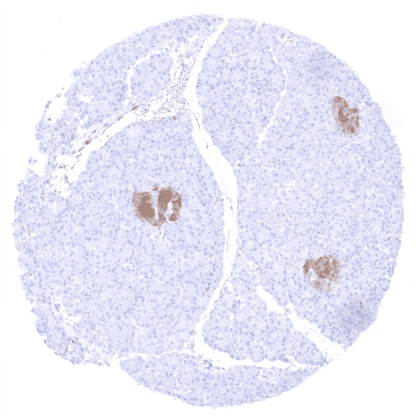
Mouse monoclonal / IgG1, kappa 1:100 – 1:200 Research Use Only Cytoplasmic Human MSVA-451M ENO2; ENOG; Enolase 2 gamma neuronal; Enolase2; Gamma-enolase; Neural enolase; Neuron specific gamma enolase; Neuron-specific enolase; NSE ; -phospho-D-glycerate hydrolyase In the colon, axons and ganglion cells in lamina propria and muscular wall must show at least a moderate NSE staining, while epithelial and lymphatic cells remain negative. In the colon, epithelial and lymphatic cells do not show NSE staining. Neuron specific enolase (NSE), is a 78 kDa phosphopyruvate hydratase encoded by the ENO2 (enolase 2) gene at12p13.31. NSE is a glycolytic enzyme involved in the energy-generating process of the cell. It catalyzes the conversion of 2-phosphoglycerate to phosphoenolpyruvate Gamma-enolase. NSE gamma is largely tissue specific. Ontogenetically, NSE gamma appears in the final stages of neuronal differentiation and can thus be utilized as a marker for nerve cell maturation. Immunohistochemical detection of NSE with antibodies can be used to identify neuronal cells and cells with neuroendocrine differentiation. NSE is also a commonly used serum marker for the monitoring of cancer patients. NSE is being non-specifically discharged from tumor cells to the blood as a consequence of cell death. Its blood level is elevated in various NSE expressing cancers. Neuron specific enolase (NSE), is a 78 kDa phosphopyruvate hydratase encoded by the ENO2 (enolase 2) gene at 12p13.31 . NSE is a glycolytic enzyme involved in the energy-generating process of the cell. It catalyzes the conversion of 2-phosphoglycerate to phosphoenolpyruvate Gamma-enolase. NSE gamma is largely tissue specific. Ontogenetically, NSE gamma appears in the final stages of neuronal differentiation and can thus be utilized as a marker for nerve cell maturation. Immunohistochemical detection of NSE with antibodies can be used to identify neuronal cells and cells with neuroendocrine differentiation. NSE is also a commonly used serum marker for the monitoring of cancer patients. NSE is being non-specifically discharged from tumor cells to the blood as a consequence of cell death. Its blood level is elevated in various NSE expressing cancers. NSE is most strongly expressed in neuronal cells of the brain where it is also seen in all nerve fibres. An at least weak to moderate immunostaining is seen in axons and ganglion cells of the peripheral nerves which are particularly frequent in the gastrointestinal wall and in the seminal vesicle. NSE shows moderate to strong expression in the medulla but not the cortex of the adrenal gland. NSE is only rarely detectable in a small fraction of cells of the diffuse neuroendocrine system. Using MSVA-451M , NSE immunostaining is also seen in chorion cells of the placenta (moderate), few Sertoli cells (weak), some endothelial cells in the stomach (weak), and in few cells of the adenohypophysis (moderate). These findings are largely consistent with RNA and protein data summarized in the Human Protein Atlas (Tissue expression NSE gamma) . Suggested positive tissue control : In the colon, axons and ganglion cells in lamina propria and muscular wall must show at least a moderate NSE staining, ... NSE is expressed in a large fraction of neuroendocrine tumors and carcinomas including small cell neuroendocrine tumors irrespective of their origins, Merkel cell carcinoma, medullary thyroid cancer, pheochromocytoma and granular cell tumors. Renal clear cell carcinoma is the most commonly NSE positive non-neuroendocrine cancer, followed by seminoma. Many other tumor types can show NSE immunostaining in some instances, however. The TCGA findings on NSE gamma RNA expression in different tumor categories have been summarized in the Human Protein Atlas. Strong NSE immunostaining in all tumor cells of a seminoma of the testis. Strong NSE positivity in all cells of a small cell carcinoma of the urinary bladder. Renal clear cell carcinoma with weak to moderate NSE positivity in 30% of tumor cells. Cancer tissue gallery No data available at the moment IHC users have different preferences on how the stains should look like. Some prefer high staining intensity of the target stain and even accept some background. Others favor absolute specificity and lighter target stains. Factors that invariably lead to more intense staining include higher concentration of the antibody and visualization tools, longer incubation time, higher temperature during incubation, higher temperature and longer duration of the heat induced epitope retrieval (slide pretreatment). The impact of the pH during slide pretreatment has variable effects and depends on the antibody and the target protein. Accordingly, multiple different protocols can generate identical staining results. All images and data shown here and in our knowledge center are obtained by the manual protocol described below. Other protocols resulting in equivalent staining are described as well. -Manual protocol Freshly cut sections should be used (less than 10 days between cutting and staining). He... A comprehensive study analyzing NSE expression in various different tumor entities would be helpful to assess the diagnostic significance of NSE IHC. The prognostic and clinical role of NSE expression should be further evaluated. The pattern of NSE immunostaining may be instrumental for postmortem assessment of brain damage. Specificity of MSVA-451M is documented by strong positive staining in cell types that are well documented to express NSE such brain and medullary adrenal gland cells as well as neuronal structures in the gastrointestinal tract and absence of staining in all tissues known to not express NSE including tissues notorious for non-specific IHC background such as kidney, colonic mucosa epithelium, and epidermis. Normal tissue gallery